I'm the author of 22+ books on digital marketing and SEO. Seven are Amazon #1 Best Sellers. I've also contributed to other books and a few books have written about me. Many are at Amazon.com (search for my name or book title).
Multi Agent Systems (MAS) by Andreas Ramos
A short 12-page ebook on Multi Agent Systems MAS for digital marketing. This explains MAS, how it works, and how to use it.
A short book (paperback or ebook) on how to create your custom AI with OpenAI ChatGPT. An example of an easy GPT and an advanced GPT with RAG (Retrieval Augmented Generation) with full numbered steps and examples. How to distribute your GPT. Notes about GPTs. Conclusion with comments about the future of GPTs. Written in plain language with lots of examples and links.
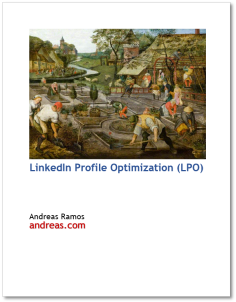
LinkedIn Profile Optimization (LPO) by Andreas Ramos.
Just as Google has an algorithm to rank pages and show the best ones at the top, LinkedIn also has an algorithm to rank profiles and show the best ones at the top. This ebook shows you how to improve your LinkedIn profile so you show up. If there's SEO (search engine optimization) for Google, then there's LPO (LinkedIn Profile optimization) for LinkedIn.
硅谷初创 Startup (Translated to Chinese) Author: 安德列亚斯·拉莫斯 (美)。 林敬农 韦忠和 译 (Translated by J.N. Lin and Frank Wei)。 安德列亚斯·拉莫斯 (Andreas Ramos) 在硅谷工作生活了近三十年,现在 California Science and Technology University (CSTU) ,加州科技大学,教授数字营销课程。安德烈亚斯著有并出版了十四本关于市场营销的书,其中一本由中国清华大学出版社出版。安德烈亚斯毕业于德国海德堡大学,会四种语言,和太太还有猫住在加州硅谷帕拉阿图市。 Published March 6, 2020. 218 Pages. Available at Amazon.com.
Ad Fraud by Andreas Ramos. I saw many students and friends at startups, companies, and organizations didn’t understand the settings in Google Ads, Facebook, and so on. They lost money. I show you how to fix that. Get this book. It'll save you lots of money.
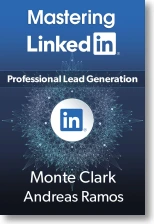
Mastering LinkedIn by Monte Clark and Andreas Ramos. This book is for B2B bizdev to use LinkedIn Sales Navigator to find leads and build connections. Sales Navigator is a powerful tool with advanced filters that let you search millions of members to find the right ones for your business. You then use Sales Nav to learn about your leads, watch their activity, contact them, and develop business connections with them.
Startup por Andreas Ramos. Traducido al español por Edgar Estanislao. Editado por Gala Gil Amat. (July 1st, 2019)
Cómo construir su startup de Silicon Valley, encontrar cofundadores, seleccionar aceleradores, tratar con inversores y vender su startup. Basado en entrevistas con 26 fundadores, jefes de aceleradores y VCs. Consigue el libro # 1 en Amazon
Twitter, Trucs et astuces pour le maîtriser par Andreas Ramos et traduit en français par Philippe Antunes (July 1st, 2019)
Apprenez tout sur Twitter. En seulement 86 pages, apprenez à utiliser les hashtags, à obtenir des suiveurs et à utiliser Twitter en français clair. Beaucoup de détails: ce que font les adolescents sur Twitter, comment la police utilise Twitter et comment utiliser Twitter en cas de catastrophe.
The Startup Audiobook by Andreas Ramos and narrated by Fawn Alleyne (June 1st, 2019)
Get the Startup book as an audiobook for your Audible, Apple iTunes, Amazon Kindle. Everything you've wanted to know on how to build your Silicon Valley startup. In clear and easy-to-follow English, 6 hours and 51 minutes.
Startup by Andreas Ramos (Second Edition, Jan. 2019)
How to build your Silicon Valley startup, find co-founders, select accelerators, deal with investors, and sell your startup. Based on interviews with 26 founders, heads of accelerators, and VCs. Get the #1 Amazon Best Seller in English, French, Spanish, and Korean. Chinese in July 2019.
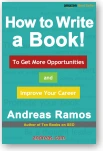
How to Write a Book! by Andreas Ramos (published by andreas.com, August 2014. 179 pages, illustrated, index.)
When I told my friends I was writing a book on how to write books, they said, "OMG! I need that book!" Why write a book? You'll get opportunities. Speaking engagements, projects, jobs, invitations to join advisory boards with pre-IPO stock, and invitations to start companies (and yes, dates).
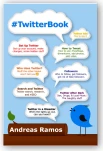
#TwitterBook by Andreas Ramos (published by andreas.com. 1st ed., Oct. 2013. 2nd ed. Sept. 2014. 86 pages, illustrated, index. Revised and updated. ISBN 978-0-9893600-4-3).
Do you "get" Twitter? The inside scoop on Twitter. In only 86 pages, learn how to use hashtags, get followers, and use Twitter in plain English. Lots of details: What teens are doing on Twitter, how the police uses Twitter, and how to use Twitter in a disaster. Get the #1 Amazon Best Seller! Go #TwitterBook
The Big Book of Content Marketing by Andreas Ramos (published by andreas.com, May 2013. 160 pages. ISBN 978-0-9893600-0-5, illustrated, index).
80% of your digital advertising doesn't reach your audience. People delete cookies or use ad blocking software. There's a new solution. Use content marketing and people will come to you. This book also shows you how to align your marketing with your company's business goals to meet top-line/bottom-line KPIs. More at The Big Book of Content Marketing.
Search Engine Marketing by Andreas Ramos and Stephanie Cota. How to use analytics to manage multichannel marketing (SEO, PPC, social networks, email, and other channels).
(McGraw-Hill, 2009. 267 pg. ISBN 978-0-07-159733-3. Illustrations, tables, index). Available at Amazon, Barnes & Noble, and other bookstores in North America, Europe, and Asia. See the webpage for the book.
Search Engine Marketing: China Edition by Andreas Ramos and Maggie Guan. How to use analytics to manage multichannel marketing. Translated to Simplified Chinese.
(Tsing Hua University Press, Beijing, China, 2010. 290 pg. ISBN 978-0-07-159733-3. Illustrations, tables, index).
Search Engine Marketing: Taiwan Edition by Andreas Ramos and Stephanie Cota. How to use analytics to manage multichannel marketing. Translated to Traditional Chinese.
(McGraw-Hill Taiwan, 2010. Illustrations, tables, index). Available in Taiwan.
Insider SEO & PPC, by Andreas Ramos and Stephanie Cota. How to use search engines to get qualified leads, prospects, and customers by building and managing SEO and PPC campaigns. Interviews with Google, Microsoft, Clicktracks Web Analytics, and others. 26 case studies. 47 tips & tricks.
(Second edition. Jain Publishing, 2006. 256 pg., 35 illustrations, tables, index. ISBN 2006 978-0875730882). Available at Amazon, Barnes & Noble, and so on.
Insider's Guide to SEO, by Andreas Ramos and Stephanie Cota. This was the first version. After a year, we updated it as a second edition (see the book above).
(Jain Publishing, 2004. 114 p., illustrated, with index and tables. ISBN 978-0875730516)
Hands-On Web Design, by Andreas Ramos. This came out in February 1996 and was one of the first books about HTML and web development. By 1998, there were hundreds of books on HTML, but I was one of the first. The book sold very well.
(Jain Publishing. 1996. 160 pages and 83 illustrations. ISBN 978-0875730769)
PCs for You and Me: Guide to DOS and Windows, by Andreas Ramos. This was a great book, but too late for the market. Windows came out in August 1995. So did Netscape. Within months, nobody cared about Windows anymore. The hot topic became HTML and web design.
(Jain Publishing. 1995. 326 pages with illustrations. ISBN 978-0875730622)
Your Second Manual (Y2M), by Andreas Ramos. I wrote this in Denmark in 1989. The Atari ST was the top computer in Europe from 1986 to 1992. My book was noted as "Most Significant Product" by a leading UK computer magazine and I was "Man of the Year" by a computer magazine in Spain. This was before email and I got dozens of letters from readers every week. I even appeared in a Danish cartoon strip for several years. The book sold over 25,000 copies at $45 each. Published in Danish, Swedish, English, Spanish, French, German, and Finnish.
I've written content that was published in other books. The best known is my article about the Fall of the Berlin Wall. I was in Berlin that night when the Wall fell. Millions of people were in Berlin but I was the only one who wrote about it. It's been published in many history books and school books.
I'm the technical editor of Search Engine Marketing, Inc. by Mike Moran and Bill Hunt (IBM Press, 3rd ed., 2014). This is the authoritative book on enterprise-level SEO. Mike is a Distinguished Engineer at IBM and was head of IBM SEO for 15 years.
The Berlin Wall. Edited by Cindy Mur. The book presents three original source materials and three academic articles about the Berlin Wall. The three source documents are a speech about the Berlin Wall and freedom by John F. Kennedy (president of the United States), a secret speech to the Soviet Communist Party by Nikita Kruschev (premier of the Soviet Union), and my account of the Fall of Berlin Wall.
(Greenhaven Press, 2003. 96 pages. ISBN 978-0737713510)
Grammar for Writing: Complete Course. By Phyllis Goldenberg, Elaine Epstein, Carol Domblewski, Martin Lee, Beverly Ann Chin. This is a standard American high school text book. They also republished my Berlin article.
(Sadlier-Oxford, 1999. ISBN 082150312X)
Secret Peace, by Jesse Richards. History's trend: declining war, advancing health, equal rights, revolutionary technology, and more, including the surprising reasons why peace is unfolding. A powerful call to action to step up our efforts to spread peace Esther Dyson, author of Release 2.0, says, "I love the thesis and believe it. Jesse Richards makes the case." He also cited my Berlin article.
(Book & Ladder Press, 2010. 434 pages. ISBN 978-0984369508)
The Cold War: Chronicles of America's Wars, by Josepha Sherman. Another republication of my Berlin article.
(Lerner Publications, 2003. 96 pages. ISBN 978-0822501503)
Complete Idiot's Guide to Technical Writing, by Krista Van Lann and Catherine Julian. Yeah, I'm in an Idiot's Guide. Is this a good thing or a bad thing?
(Alpha Books, 2001. 352 pages. ISBN 0028641469)
Writer as Publisher: Independent Publishing, edited and produced by Andreas Ramos and Stephanie Cota. Stephanie and I arranged a day-long seminar for independent publishing by writers. We recorded the seminar and produced the book and four-CD set. We also set up an ecommerce site for this project. The books and CDs were published by the NWU.
(National Writers Union 2002. 60 page book and four audio CDs with five hours of audio. ISBN 0-615-12260-4)
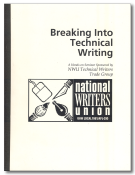
Breaking Into Technical Writing, edited by Andreas Ramos. I organized and led annual seminars on technical writing. I also produced the books for these. These were published by the NWU.
(National Writers Union NWU, 2000. 90 pages with illustrations and index.)
Books that Cite Me
There are several books which include chapters or sections about me and my work.
Work in the New Economy: Flexible Labor Markets in Silicon Valley. By Chris Benner. A book on the economics and strategies of contractors in Silicon Valley. I was interviewed for this and made comments on the draft manuscript.
(Blackwell Publishing, 2002. 320 pages. ISBN 0631232508)
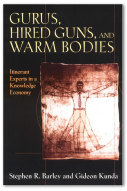
Gurus, Hired Guns, and Warm Bodies: Itinerant Experts in a Knowledge Economy. By Professors Stephen R. Barley and Gideon Kunda. Steve Barley is the Charles M. Pigott Professor of Management Science and Engineering and Co-Director of the Center for Work, Technology, and Organization at Stanford University's School of Engineering. Professor Gideon Kunda is at the Department of Labor Studies at Tel Aviv University.
(Princeton University Press, 2004. 352 pages. ISBN 978-0691119434)
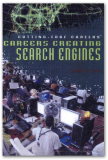
Careers Creating Search Engines, by Judith Levin. I'm mentioned in this book.
(Published 2006, The Rosen Publishing Group, 2006. 64 pages. ISBN 1404209573)
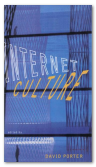
Internet Culture. By David Porter. I'm also mentioned here.
(Routledge, 1997. ISBN 0415916836)
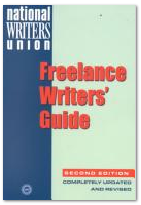
National Writers' Union Freelance Writers' Guide. By James Waller for the NWU. Mentioned again.
(National Writers Union, 2000. 264 pages. ISBN 0964420813)
Viral Change: The Alternative to Slow, Painful and Unsuccessful Management of Change in Organizations, by Leandro Herrero. I'm also mentioned in this book.
(Meetingminds, 2006. 392 pages., ISBN 978-1905776016)
Language Machines: Essays from the English Institute, by Jeffrey Masten. And another mention.
Rubble: Unearthing the History of Demolition, by Jeff Byles. From the straight boulevards that smashed their way through rambling old Paris to create the city we know today to the televised implosion of Las Vegas casinos to make room for America's ever grander desert of dreams, demolition has long played an ambiguous role in our lives. In lively, colorful prose, Rubble rides the wrecking ball through key episodes in the world of demolition. My Berlin article was included in this book.
(Published by Random House Digital, Inc., November 2005, 234 pages.)
Trudy's Promise, by Marcia Preston. Branded the wife of a defector and sent to prison, Trudy Hulst, wondering if her husband survived his attempted escape past the newly constructed Berlin Wall, makes a break for freedom, determined to find the son she had to leave behind. 40,000 first printing. My Berlin article was also cited in this book.
(Published by Mira, March 2008. 360 pages)
PDFs and White Papers
I've written many white papers. These are generally PDFs for download. A number of these are on my website.
Technical Books
And then there are the computer manuals. I wrote a lot of computer manuals. From 1992 to 2001, I was the technical publications manager at several dozen Silicon Valley startups and dotcoms. I wrote the manual for the first USB scanner, the manual for Adobe Pagemill (an HTML editor), and the FAQs for Dialpad.com. Some of the stuff I wrote:
SUN Microsystem's Guide to Internationalization: How to adapt SUN Microsystems UNIX software into 32 languages.
SGI (Silicon Graphics): Produced the documentation set in German, French, Spanish, and Japanese.
Netcom's UNIX manual (1994): Netcom.com was the first public ISP and for two or three years, nearly everyone in Silicon Valley used it. I wrote the manual for it.
Brio Technology documentation for business intelligence (BI) tools for UNIX and Windows in English, German, French, Italian, and Japanese.
I've also written articles for British, Danish, Swedish, Norwegian, Italian, Spanish, German, Chinese, and US computer magazines.












 , Barnes & Noble, and other bookstores in North America, Europe, and Asia. See